Catalytic vs NDIR Methane Sensors: Which Is Better?
Methane (CH₄) monitoring is a key element of industrial safety, environmental control, and process supervision. Due to its flammability and wide explosive range, methane requires continuous and reliable concentration measurement in both confined and open industrial environments. In addition to explosion hazards, methane emissions are subject to increasing regulatory control because of their environmental impact.
At present, methane detection systems are primarily based on two sensing principles: catalytic (pellistor) sensors and non-dispersive infrared (NDIR) sensors. These technologies differ fundamentally in their physical operating principles, long-term stability, maintenance requirements, and suitability for specific operating conditions.
This section provides a technical overview of both approaches, focusing on how they work and where each technology is most appropriately applied, rather than positioning one as universally superior.
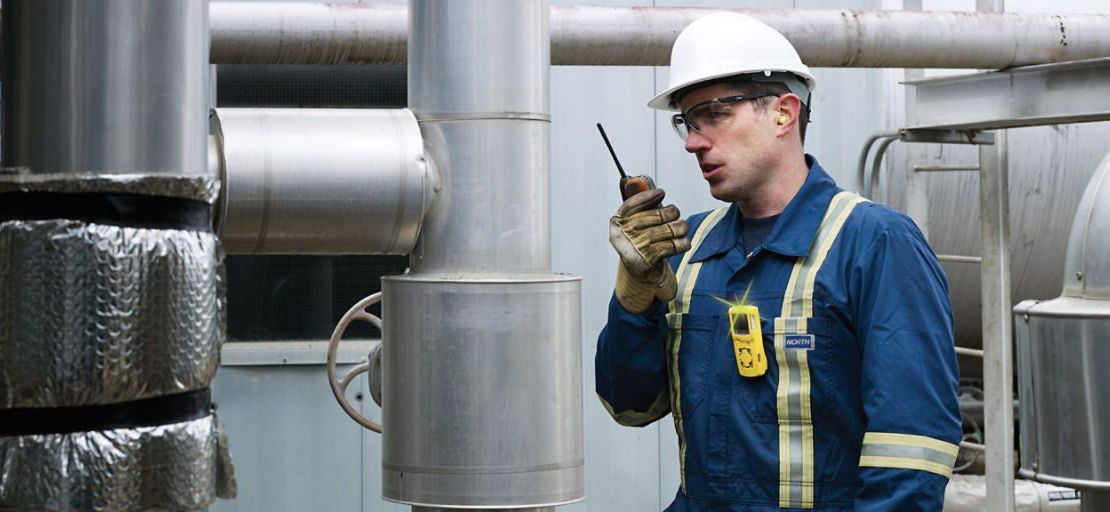
Why Methane Detection Matters
Continuous methane monitoring is required in applications where gas release may occur during normal operation or as a result of equipment failure, including:
- Oil and gas production, transportation, and processing facilities;
- Chemical plants and refineries;
- Underground mining and drilling operations;
- Biogas, landfill, and wastewater treatment systems;
- Building safety systems, including HVAC and gas leak detection in residential and commercial premises.
In these applications, methane sensors are used to provide early leak detection, support automated safety responses, and enable compliance with explosion protection and functional safety requirements. Depending on the installation type, applicable regulations typically include ATEX and IECEx schemes for explosive atmospheres, as well as regional certification frameworks for industrial gas detection equipment.
Understanding Methane Sensor Technologies
Methane sensors measure gas concentration using either chemical or optical detection principles. The two most widely used technologies are catalytic (pellistor) sensors and non-dispersive infrared (NDIR) sensors, which are based on fundamentally different physical mechanisms.
Catalytic sensors detect methane through controlled oxidation on a heated catalytic element.NDIR sensors determine methane concentration by measuring infrared light absorption at characteristic wavelengths.
The choice between these technologies is driven by the required measurement range, environmental conditions, and acceptable maintenance level.
How Catalytic (Pellistor) Methane Sensors Work
Catalytic sensors measure methane concentration through controlled oxidation on a catalyst-coated heated element. When methane is present, oxidation increases the temperature of the sensing bead, causing a change in electrical resistance that is converted into a gas concentration signal, typically expressed as %LEL.
Main features:
- Measurement range: typically 0–100% LEL
- Response time: fast under diffusion conditions (commonly 5–15 s T90 in practical installations)
- Oxygen requirement: required to sustain the oxidation process
- Long-established and well-understood technology
- Effective for LEL-based explosion protection systems
- Relatively low initial sensor cost
- Requires regular calibration to compensate for catalyst aging
- Susceptible to catalyst poisoning (e.g. silicones, sulfur- and lead-containing compounds)
- Limited operational lifetime, typically 2–5 years
Industrial safety systems in oil and gas facilities, refineries, drilling installations, and other environments where LEL monitoring is used as the primary explosion prevention method.
How NDIR (Infrared) Methane Sensors Work
NDIR (Non-Dispersive Infrared) sensors measure methane concentration by detecting absorption of infrared radiation at characteristic wavelengths around 3.3 µm, corresponding to CH₄ molecular vibration bands. The gas concentration is calculated from the attenuation of the infrared signal passing through the measurement path.
Main features:
- Measurement range: from ppm levels up to percent or full-volume ranges, depending on optical configuration
- Oxygen requirement: not required
- Response time: typically 10–30 s T90 in practical diffusion-based designs
Advantages:
- High long-term stability due to non-consumptive measurement principle
- Independent of oxygen concentration
- Immune to chemical poisoning affecting catalytic sensors
- Low maintenance requirements
- Long operational lifetime, typically exceeding 10 years
Limitations:
- Higher initial cost compared to catalytic sensors
- Sensitivity to optical contamination if diffusion openings or optical surfaces are not properly protected
Typical applications:
Continuous methane monitoring in industrial automation systems, HVAC and building safety installations, biogas and wastewater facilities, and low-power or networked (IoT) gas detection devices.
Catalytic vs NDIR Methane Sensors: Side-by-Side Comparison
| Parameter | Catalytic Sensor (Pellistor) | NDIR Sensor (Infrared) | |
| Detection principle | Methane oxidation on catalytic element → heat change | Infrared light absorption at characteristic CH₄ wavelengths | |
| Requires oxygen | Yes | No | |
| Response time (T90) | Typically 5–15 s in practical installations | Typically 10–30 s in diffusion-based designs | |
| Measurement range | Typically 0–100% LEL | ppm to % vol., including LEL and % vol. ranges | |
| Accuracy & stability | Moderate; affected by catalyst aging | High; low long-term drift | |
| Maintenance | Regular calibration; risk of catalyst poisoning | Low maintenance; calibration infrequently required | |
| Operational lifetime | Typically 2–5 years | Typically >10 years | |
| Operating environment | Industrial areas with sufficient oxygen | Broad, including oxygen-deficient environments | |
| Sensitivity to contaminants | High (e.g. silicones, sulfur compounds) | Low to chemical poisons; sensitive to optical fouling | |
| Power consumption | Moderate to high | Low to ultra-low | |
| Cost structure | Lower initial sensor cost | Higher initial cost, lower total cost of ownership | |
| Best suited for | Legacy LEL-based explosion protection systems | Continuous monitoring and modern gas detection systems |
Which Technology Is Better?
Catalytic sensors are appropriate when:
- Detection is focused on concentrations near the Lower Explosive Limit (LEL);
- The system is designed around LEL-based safety logic;
- Regular calibration and sensor replacement are acceptable operationally.
- Continuous measurement and long-term stability are required;
- Operation in oxygen-deficient or variable atmospheres is expected;
- Low power consumption and digital interfaces are needed;
- Maintenance access is limited and long service life is critical.
While catalytic sensors typically have a lower initial cost, NDIR sensors often provide a lower total cost of ownership due to longer lifetime and reduced calibration and replacement requirements.
Real-World Applications
| Industry | Commonly Used Technology | Rationale | |
| Oil & Gas, Refineries | Catalytic / NDIR | Catalytic sensors are widely used in legacy LEL-based safety systems; NDIR sensors are increasingly applied for continuous monitoring and reduced maintenance | |
| HVAC and Smart Buildings | NDIR | Low power consumption, long service life, and stable long-term measurement | |
| Biogas & Wastewater | NDIR | Reliable operation in oxygen-deficient and high-humidity environments | |
| Mining & Drilling | Catalytic / NDIR | Catalytic sensors remain common in LEL safety systems; NDIR sensors are used where oxygen concentration is variable or maintenance access is limited | |
| IoT & Home Safety | NDIR | Compact size, digital interface, and ultra-low power operation |
Recent Innovations in Methane Detection
- Catalytic sensors: improved resistance to catalyst poisoning, enhanced self-diagnostic functions, and more compact sensor designs.
- NDIR sensors: reduced power consumption through solid-state and MEMS-based infrared sources, increased integration of digital interfaces, and support for multi-gas measurement within a single optical platform.
Environmental and Safety Standards
Methane sensors used in industrial safety applications are subject to international regulations governing operation in explosive and hazardous environments.
- ATEX and IECEx — certification schemes for equipment intended for use in explosive atmospheres in industrial facilities.
- IEC / EN 60079 series — standards defining requirements for intrinsic safety (Ex ia), flameproof protection (Ex d), and optical radiation safety for gas detection equipment.
- UL and CSA standards — North American certification frameworks for hazardous location equipment used in industrial safety systems.
Conclusion
Catalytic and NDIR methane sensors are both established technologies in industrial gas detection, each addressing different operational requirements.
Catalytic sensors remain appropriate for LEL-based explosion protection systems where oxygen is present and regular calibration and maintenance are part of normal operation.
NDIR sensors are well suited for continuous industrial monitoring, particularly in applications requiring long-term stability, low maintenance, and reliable operation in oxygen-deficient or chemically aggressive environments.
In industrial safety practice, the choice between catalytic and NDIR technologies should be based on system architecture, maintenance strategy, environmental conditions, and lifecycle cost, rather than on the sensing principle alone.
1. What is the main difference between catalytic and NDIR methane sensors?
2. Do catalytic sensors operate without oxygen?
3. How often do these sensors require calibration?
NDIR sensors usually require infrequent calibration, depending on system requirements and certification scheme.