Different Types of Gas Sensors Explained
Gas sensors are a fundamental element of industrial safety, environmental monitoring, and process control systems. They are used to detect toxic and combustible gases, monitor air composition, and provide early warning in hazardous environments.
Different gas detection technologies are based on chemical, physical, or optical principles and differ significantly in terms of accuracy, stability, maintenance requirements, and areas of application. This article provides an overview of the main types of gas sensors, explains their operating principles, and outlines where each technology is typically applied in safety-critical and industrial systems.
What Is a Gas Sensor?
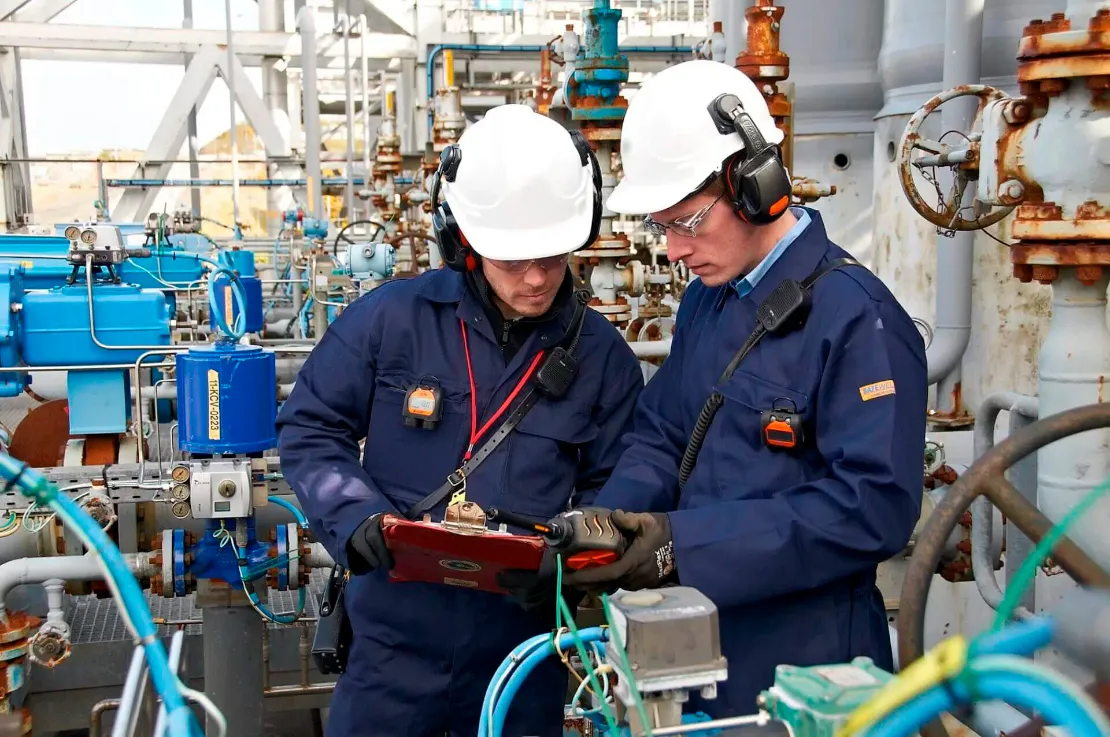
Gas sensors are used in industrial safety systems, environmental monitoring, and process control applications where continuous or periodic gas measurement is required. Their performance is defined by several key parameters, including sensitivity to low gas concentrations, response time to concentration changes, selectivity to the target gas, and operational lifespan before recalibration or replacement is required.
Classification of Gas Sensors
One common classification is based on the detection principle, which may be chemical, physical, or optical. Sensors are also distinguished by the measurement interface, such as analog or digital signal output, depending on how measurement data is transmitted and processed. In addition, sensors are categorized by application area, including industrial safety, environmental monitoring, automotive systems, and indoor air quality control.
These classification criteria provide a practical framework for comparing gas sensor technologies and selecting an appropriate solution based on accuracy requirements, operating environment, regulatory constraints, and lifecycle cost.
Main Types of Gas Sensors
Electrochemical Gas Sensors
Principle: Detect gas through an electrochemical reaction that produces an electrical current proportional to the gas concentration.
Typical gases: CO, H₂S, O₂, NO₂
Not suitable for CH₄/CO₂.
Advantages:
- High accuracy and selectivity
- Low power consumption
Limitations:
- Limited lifespan (usually 1–3 years)
- Sensitive to temperature and humidity
Common uses: Carbon monoxide detectors, industrial safety systems.
Principle: Measure changes in the resistance of a metal oxide semiconductor when exposed to gas molecules.
Typical gases: CO, CH₄, LPG, VOCs
Advantages:
- Low cost
- Fast response
- Compact design
Limitations:
- Sensitive to humidity and temperature
- Requires heater
- Poor selectivity
- Baseline drift
Common uses: Home gas detectors, air purifiers, IoT air quality devices.
- Principle: Detect combustible gases through catalytic oxidation, which changes the sensor’s temperature and resistance.
Typical gases: CH₄, H₂, propane, butane
- Advantages:
- Reliable for flammable gas detection
- Good accuracy in harsh conditions
Limitations:
- Requires O2, consumes a lot of energy (from 15–150 mW depending on the type)
- Requires oxygen to function
- Catalyst can be poisoned by certain compounds
Common uses: refineries.
Principle: Measure gas concentration based on the absorption of infrared light at specific wavelengths.
Typical gases: CO₂, CH₄, hydrocarbons
Advantages:
- Excellent stability and long lifespan
- No oxygen required
- Non-consumable sensing element
Limitations:
- Higher cost
- Sensitive to dust and optical contamination
Common uses: Industrial safety, environmental monitoring, automotive air quality control, gas pipelines.
Principle: Detect gases by measuring sound waves generated when gas molecules absorb modulated light.
Typical gases: CO₂, CH₄, NH₃
Advantages:
- Extremely high precision
- Suitable for trace gas detection
Limitations:
- PACs are really expensive and rarely used outside of high-precision CO2 sensors
- Expensive
- Complex optical and acoustic design
Common uses: Laboratory analysis, medical diagnostics, environmental monitoring.
Principle: Detect changes in light transmission within an optical fiber exposed to gas.
Typical gases: H₂, hydrocarbons, CO₂
Advantages:
- Immune to electromagnetic interference
- Ideal for remote or explosive environments
Limitations:
- Fiber Bragg sensors are not suitable for all gases. They are most often used for H2 detection in the energy sector.
- Fragile, expensive installation
Common uses: Oil & gas industry, power plants, confined spaces.
Comparison Table: Gas Sensor Technologies
| Sensor Type | Working Principle | Typical Gases | Advantages | Limitations | |
| Electrochemical | Chemical reaction | CO, O₂, H₂S | Accurate, low power | Limited lifespan | |
| Semiconductor (MOS) | Resistance change | CO, CH₄, LPG | Low cost, fast response | Sensitive to humidity | |
| Catalytic (Pellistor) | Heat from oxidation | CH₄, H₂ | Reliable, proven tech | Needs oxygen | |
| NDIR (Infrared) | IR absorption | O₂, CH₄, С₃Н₈ | Long lifespan, stable | Expensive | |
| Photoacoustic | Light → sound | CO₂, CH | Ultra-precise | Complex, costly | |
| Optical Fiber | Light modulation | H₂, hydrocarbons | Remote, EMI-proof | Fragile |
Key Factors When Choosing a Gas Sensor
The selection of a gas sensor starts with a clear definition of the target gas and the concentration range that must be reliably detected. Different technologies are optimized for toxic gases, combustible gases, or background gas monitoring, and their suitability depends directly on the sensing principle.
Operating conditions play a critical role in sensor performance. Temperature range, humidity, presence of dust or chemical contaminants, and ventilation conditions all influence measurement stability and long-term reliability. Power consumption and response characteristics must also be evaluated in the context of the application, particularly for fixed installations versus portable or battery-powered devices.
Regulatory requirements are another decisive factor. Sensors used in industrial safety systems often need to comply with standards such as ATEX or IECEx, which impose constraints on design, installation, and operation. Finally, maintenance aspects including calibration intervals, expected service life, and total cost of ownership should be considered to ensure reliable operation over the full lifecycle of the system.
Each gas detection technology involves specific trade-offs. The appropriate choice depends on the application environment, safety objectives, and regulatory framework rather than on a single performance parameter.
Applications of Gas Sensors
In environmental monitoring, gas sensors are applied to measure emissions of gases such as carbon dioxide and methane for air quality assessment and environmental reporting. In building systems, gas detection supports indoor air quality control and ventilation management. Automotive applications include monitoring of cabin air quality and exhaust-related gases, while in healthcare settings sensors are used for measuring oxygen and carbon dioxide concentrations in medical equipment. In the consumer segment, gas sensors are integrated into portable detectors and air purification devices for general safety and comfort.
Future Trends in Gas Detection Technologies
Current developments focus on extending sensor lifetime, reducing drift, and lowering power consumption, particularly for fixed installations and long-term monitoring applications. Increasing attention is also given to compact multi-gas solutions that combine several sensing functions within a single device while maintaining acceptable accuracy and reliability. At the system level, greater emphasis is placed on simplifying calibration procedures and improving diagnostic capabilities to support predictable maintenance and compliance with safety requirements.
Overall, future advances in gas detection are expected to enhance robustness and operational reliability, reinforcing the role of gas sensors as a fundamental component of industrial safety and monitoring systems rather than transforming them into standalone digital platforms.
Conclusion
Gas sensors are a fundamental component of safety, environmental monitoring, and process control systems. Different sensing technologies are based on distinct physical and chemical principles, which directly determine their performance, stability, maintenance requirements, and suitability for specific applications.
Understanding the characteristics and limitations of each gas sensor type enables informed selection based on target gas, operating conditions, regulatory constraints, and lifecycle considerations. Proper choice, correct installation, and regular verification are essential to ensure reliable gas detection and long-term system performance.