Home / Media / News

NDIR vs Electrochemical Sensor: Choosing Gas Sensing for CO2 and Hydrocarbons

Selecting the correct sensing technology is the single most important decision an OEM makes when designing a gas detection product. The NDIR vs electrochemical sensor question comes up on almost every project, because the two technologies target fundamentally different measurement problems. This guide explains how each works, where each excels, and how lifetime, selectivity, and maintenance shape total cost of ownership.
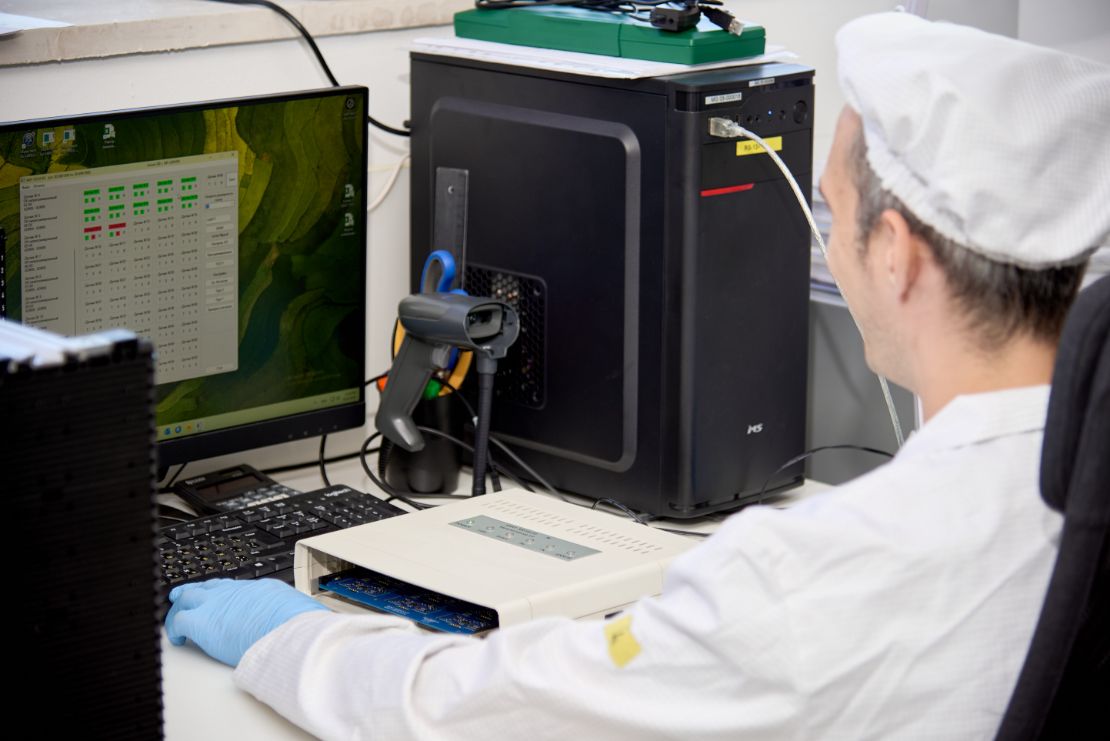
NDIR vs Electrochemical Sensor

How an Electrochemical Gas Sensor Works

An electrochemical gas sensor measures a target gas through a chemical reaction. The gas diffuses through a membrane into a liquid or gel electrolyte, where it is oxidised or reduced at a sensing electrode. This reaction generates a current proportional to gas concentration. The key characteristic is that the electrolyte is a consumable reagent, thus it is gradually depleted by the reaction and by evaporation, so the sensor ages whether or not gas is present. Electrochemical cells are excellent for toxic gas detection — carbon monoxide (CO), hydrogen sulphide (H2S), and oxygen (O2) deficiency — at low ppm levels and modest cost. The critical limitation: they are not suitable for CO2 or hydrocarbon detection. CO2 is chemically stable and does not react usefully at the electrode, and hydrocarbons such as methane, propane and butane cannot be measured directly.

How an NDIR Sensor Works 

As an optical technique, NDIR sensing relies on the absorption of infrared light rather than on chemical reactions. An infrared source emits light through a gas sample; the target gas absorbs specific wavelengths, and a detector behind an optical filter measures the attenuation per the Beer-Lambert relationship. This makes NDIR the natural choice for a CO2 sensor and for hydrocarbon detection, because CO2, methane, propane and other hydrocarbons all have strong IR absorption bands. Nothing is consumed — the measurement is purely physical. MIPEX-branded NDIR sensors from MGS Technology add ultra-low power consumption (0.04–0.2 mW), enabling multi-year battery-powered and wireless devices, across ranges from ppm to 100% vol. 

NDIR vs Electrochemical Sensor: Direct Comparison 

CriterionNDIR Sensor
Electrochemical Sensor
Principle
IR absorption (optical)
Chemical reaction (electrolyte)
Best-fit gases
CO2, methane, propane, hydrocarbons
CO, H2S, O2 and toxic gases
CO2 / hydrocarbons
Ideal
Not suitable
Consumables
None
Electrolyte (depletes)
Typical lifetime
10+ years
~1–2 years
Poisoning
Not affected
Susceptible
Oxygen dependence
NoneSome cells require O2
Selectivity
High (wavelength-specific)
Moderate, cross-sensitive
RecalibrationInfrequent, low driftFrequent

Lifetime and Maintenance Trade-offs

Sensor lifetime is where the technologies diverge most sharply. An electrochemical cell has a finite operating life — commonly one to two years — because the electrolyte dries out and drifts, forcing scheduled replacement and frequent recalibration. NDIR sensors have no consumable element, are not poisoned by contaminants, and do not depend on oxygen, so a well-designed optical module can operate for 10+ years with low drift and minimal recalibration. For remote or wireless installations, this difference dominates the maintenance budget.

Temperature, Humidity, and Environmental Effects

Both technologies respond to environment. Electrochemical cells are sensitive to temperature and humidity swings that accelerate electrolyte loss and shift baseline. NDIR is affected by temperature-dependent source and detector behaviour, though this is effectively corrected through internal compensation and a reference channel. Despite these environmental influences common to any sensing technology, the MIPEX NDIR sensors are engineered to excel in the harshest operating conditions. They operate stably across a wide temperature range from −60 °C to +60 °C, while their special optical design with solid-state components provides excellent resistance to dust, vapour and vibration, which virtually eliminates drift and minimises measurement errors even in underground mining applications. Furthermore, MIPEX sensors have intrinsically safe explosion protection ("ia") in accordance with IECEx, ATEX, UL913 and CSA certifications, making them ideally suited for monitoring hydrocarbons and CO₂ in potentially explosive atmospheres where safety and durability are non-negotiable. 

Which to Choose: Decision Guide 

  • Detecting CO2 (HVAC, air quality, IoT): choose NDIR — the only practical technology for CO2.
  • Detecting combustible hydrocarbons (methane, propane, butane): choose NDIR for high selectivity and long, poison-free service.
  • Detecting toxic gases (CO, H2S) or oxygen deficiency: choose an electrochemical cell.
  • Battery-powered, wireless gas analyzers: choose ultra-low-power NDIR to avoid consumable replacement.
  • Multi-gas platforms: combine both — NDIR for CO2/hydrocarbons, electrochemical for toxic gases. 

Conclusion

The NDIR vs electrochemical sensor decision is ultimately about matching physics to the target gas. Electrochemical cells remain the right tool for toxic gas detection, but for CO2 and hydrocarbons, NDIR delivers superior selectivity, negligible maintenance and a decade-plus lifetime. For OEMs building durable, low-power detection products, MIPEX NDIR modules from MGS Technology provide a certified, integration-ready foundation.
We use cookies
Cookie preferences
Below you may find information about the purposes for which we and our partners use cookies and process data. You can exercise your preferences for processing, and/or see details on our partners' websites.
Analytical cookies Disable all
Functional cookies
Other cookies
By submitting this form, I confirm that I have read and understood the Privacy Policy. I voluntarily consent to the processing of my personal data (including name, email, phone number, and message content) by MGS Technology for the purpose of responding to my inquiry. Learn more about our cookie policy.
I understand Details
Cookies