Propane Gas Monitoring in Storage Facilities
Propane (C₃H₈) is widely stored and handled at industrial LPG terminals, tank farms, and distribution facilities. Due to its flammability and higher density compared to air, uncontrolled propane leaks in storage areas present a significant explosion and fire hazard, especially in confined or poorly ventilated zones.
Propane gas monitoring systems are therefore a mandatory element of safety infrastructure at storage facilities. They provide continuous leak detection and support timely alarms and protective actions before hazardous concentrations are reached. This article outlines how propane gas monitoring is implemented in storage facilities, focusing on detection technologies, system integration, and compliance with industrial safety requirements.
Why Propane Gas Monitoring Is Critical
Propane is stored under pressure as liquefied petroleum gas (LPG). Due to its higher density compared to air, any release tends to accumulate near ground level, particularly in enclosed or poorly ventilated areas. In such conditions, even relatively small leaks can create flammable atmospheres within the propane explosive range of approximately 2.1 to 9.5 percent by volume in air.
In storage facilities, propane leaks typically originate from valves, fittings, seals, pressure regulation equipment, or from mechanical stress on pipelines and tanks. If not detected early, leaked gas can accumulate unnoticed, increasing the risk of ignition and posing an additional hazard through oxygen displacement in confined spaces.
For these reasons, continuous propane gas monitoring is a fundamental requirement in storage operations. Early detection enables timely alarms and protective actions, forming the basis of effective leak prevention and explosion risk control at LPG storage sites.
Understanding Propane Storage Facilities
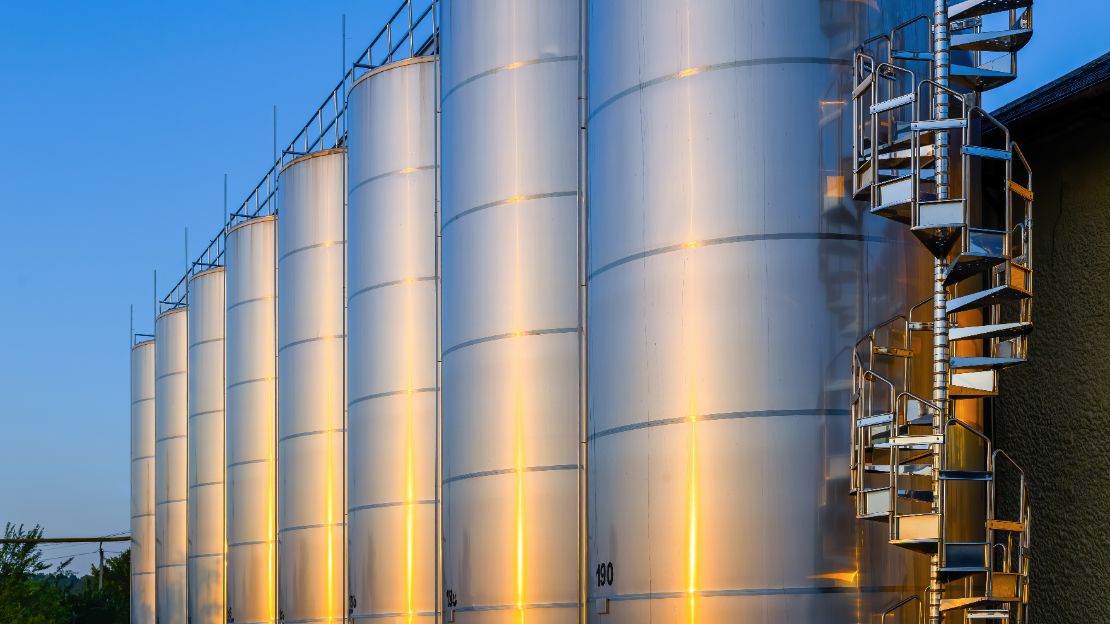
Propane storage facilities vary in design depending on capacity, operating pressure, and distribution model. Typical configurations include bulk LPG terminals and distribution hubs, cylinder storage warehouses, above-ground and underground tanks, as well as on-site storage at industrial facilities.
Effective gas monitoring depends not only on sensor technology but also on correct sensor placement. In storage areas, sensors are installed near valves, joints, pumps, and other potential leak points. Because propane is heavier than air, detectors are positioned close to ground level and in enclosed or poorly ventilated spaces, including filling stations and tank perimeters.
Correct placement of propane gas sensors enables early leak detection, allowing hazardous concentrations to be identified and controlled before flammable conditions develop.
How Propane Gas Monitoring Systems Work
Measured concentrations are evaluated against predefined thresholds referenced to the Lower Explosive Limit (LEL). When warning levels are reached, the system activates audible and visual alarms and notifies operators. At higher concentrations, safety logic initiates predefined responses such as increased ventilation or automatic isolation of gas supply sections.
This closed-loop interaction between sensors, control units, and protective equipment ensures that propane leaks are detected and mitigated before flammable conditions can develop.
Types of Propane Gas Sensors
- Well-established technology for LEL-based explosion protection
- Requires the presence of oxygen
- Sensitive to catalyst poisoning and aging, requiring regular calibration
Outdoor tank areas and legacy explosion protection systems where routine maintenance access is available.
- Independent of oxygen concentration
- High long-term stability and low drift
- Reduced maintenance requirements and extended service life
Fixed installations in LPG storage facilities and automated monitoring systems requiring continuous, reliable operation.
Semiconductor sensors detect propane through changes in the electrical resistance of a sensitive layer exposed to gas.
- Strongly affected by humidity, temperature, and cross-sensitivity
- Limited measurement stability compared to catalytic and NDIR technologies
Non-hazardous or auxiliary applications where explosion protection requirements are limited.
Comparison of Propane Sensor Technologies
| Parameter | Catalytic (Pellistor) | Semiconductor (MOS) | NDIR (Infrared) | |
| Detection principle | Catalytic oxidation of propane | Change of semiconductor resistance | Infrared absorption by C₃H₈ | |
| Requires oxygen | Yes | Yes | No | |
| Response time (T90) | Typically 5–15 s in installed systems | Typically >10 s, application-dependent | Typically 10–30 s depending on optics and diffusion | |
| Measurement purpose | LEL-based explosion protection | Indicative / auxiliary detection | Quantitative continuous monitoring | |
| Accuracy & stability | Moderate; affected by catalyst aging | Moderate; affected by environment | High; low long-term drift | |
| Maintenance | Regular calibration and replacement | Periodic verification | Low maintenance; infrequent calibration | |
| Operational lifetime | Typically 2–5 years | Typically 3–5 years | Typically >10 years | |
| Sensitivity to contaminants | High (silicones, sulfur compounds) | Medium (humidity, solvents) | Low to chemical poisons; sensitive to optical fouling | |
| Cost structure | Low initial cost | Low initial cost | Higher initial cost, lower lifecycle cost | |
| Typical application | Legacy or LEL-based protection zones | Non-hazardous or auxiliary use | Automated LPG storage and continuous safety monitoring |
Fixed vs Portable Monitoring Systems
| Feature | Fixed Systems | Portable Detectors | |
| Primary purpose | Continuous, 24/7 monitoring of hazardous areas | Personal protection and inspection support | |
| Installation | Permanently installed at defined control points | Handheld or wearable device | |
| Detection technology | NDIR or catalytic, depending on safety concept | Catalytic; MOS limited to non-hazardous use | |
| Power supply | Wired or intrinsically safe loop | Battery-powered | |
| Maintenance | Periodic calibration according to site procedures | Frequent bump tests and functional checks | |
| Typical use case | LPG storage facilities, tank farms, terminals | Maintenance work, inspections, mobile operations |
Integration with Leak Prevention Systems
In propane storage facilities, gas monitoring systems are integrated into dedicated leak prevention and safety control architectures. Fixed propane sensors transmit concentration signals to safety controllers or distributed control systems responsible for executing predefined protective actions.
When gas concentration exceeds configured thresholds referenced to the Lower Explosive Limit (LEL), the system initiates alarm signaling and automatic safety functions. These typically include isolation of gas supply lines through shut-off valves and activation of ventilation systems to reduce propane concentration in affected areas. Measurement data is recorded to support incident analysis, operational traceability, and regulatory compliance.
Such integration ensures that propane detection is directly linked to preventive and mitigation measures, allowing leaks to be controlled at an early stage without reliance on manual intervention.
Safety Standards and Regulations
Propane gas monitoring systems used at storage facilities must comply with international regulations governing equipment operation in explosive atmospheres and the safe handling of liquefied petroleum gas.
ATEX and IECEx certification schemes define requirements for electrical equipment intended for use in hazardous gas environments, including design, testing, and conformity assessment. The IEC / EN 60079 series specifies technical rules for electrical equipment in explosive atmospheres, covering intrinsic safety, flameproof protection, installation, and system integration. In the United States, propane storage and handling are regulated by NFPA 58 (Liquefied Petroleum Gas Code), while occupational and environmental compliance is governed by OSHA and EPA requirements.
Alarm and shutdown thresholds in propane storage facilities are defined as percentages of the Lower Explosive Limit (LEL) and are implemented in accordance with site-specific risk assessments and local regulations. Compliance with applicable standards is a mandatory requirement for the safe operation of any LPG storage installation.
Maintenance and Calibration
Reliable operation of propane gas monitoring systems depends on regular maintenance and verification in accordance with site procedures and regulatory requirements.
Calibration intervals are defined by sensor technology, environmental conditions, and applicable standards, and typically range from three to six months when certified calibration gases are used. Routine visual inspection of sensor housings and sampling inlets is required to identify contamination, corrosion, or mechanical damage that may affect performance. Portable detectors used for inspections and maintenance activities are subject to frequent functional checks and bump testing.
In outdoor or dusty storage environments, periodic cleaning or replacement of protective filters is necessary to maintain stable sensor response. Consistent application of these measures ensures reliable propane detection and sustained performance of the overall safety system.
Common Challenges in Propane Storage Monitoring
Propane storage facilities impose demanding operating conditions on gas detection equipment. Sensors and associated hardware are exposed to environmental and operational factors that can affect measurement stability and long-term reliability.
Typical challenges include high humidity, temperature variations, dust and oil contamination, limited physical access for maintenance, and electromagnetic interference from nearby industrial equipment. These factors must be considered during system design and installation.
To ensure reliable operation, propane monitoring systems are implemented with protective measures such as sealed enclosures with appropriate ingress protection ratings, certified explosion-proof or intrinsically safe housings, and temperature-compensated measurement electronics. Design provisions that allow straightforward inspection and maintenance access are also critical for sustained performance.
Addressing these challenges at the engineering stage is essential to maintaining dependable propane detection throughout the service life of storage facilities.
Future Trends in Propane Leak Detection
The development of propane leak detection in storage facilities is focused on improving system reliability, reducing maintenance effort, and strengthening integration with existing safety infrastructure, rather than introducing fundamentally new monitoring concepts.
Current trends include wider adoption of NDIR sensors as a reference technology for continuous monitoring, increased emphasis on long-term stability and reduced calibration frequency, and deeper integration of gas detection with automatic isolation and ventilation systems. Design improvements are primarily aimed at enhancing robustness, intrinsic safety, and operational availability in demanding storage environments.
In practice, progress in propane leak detection is achieved through incremental engineering improvements that enhance preventive safety performance while maintaining compliance with established industrial standards.
Case Study: Preventing a Leak in a Propane Terminal
An LPG storage terminal implemented a fixed propane gas monitoring system based on NDIR sensors in tank zones and pump areas. The system was integrated with the site’s alarm signaling and emergency shutdown infrastructure.
During routine operation, elevated propane concentration was detected near a valve assembly. The monitoring system generated an alarm and initiated predefined protective actions, including isolation of the affected section and activation of ventilation. The leak was addressed before flammable concentrations developed.
The incident demonstrated the effectiveness of continuous propane monitoring and automated safety response in controlling leak scenarios at storage terminals and reducing the risk of escalation.
Conclusion
Propane is widely used as an industrial fuel, but its storage and handling require strict control due to the associated explosion and fire hazards. Effective risk management at LPG storage facilities depends on continuous gas monitoring and reliable integration of detection systems with alarms, ventilation, and emergency shutdown functions.
Catalytic sensors remain applicable in LEL-based explosion protection schemes where regular maintenance is available. NDIR sensors provide stable, long-term propane monitoring with reduced calibration requirements and are well suited for fixed installations at storage terminals and tank farms. Integrated leak prevention systems ensure timely response to detected leaks and reduce the risk of escalation.
The selection and implementation of propane gas monitoring systems should be based on hazard assessment, operating conditions, and regulatory requirements. Properly designed and maintained detection systems are a fundamental element of safe and reliable LPG storage operations.